
Strong and Resilient Hair

Custom Image

Your Hair, Your Crown

Your hair is the crown you never take off, so it deserves the best care. It reflects not only your personality but also your overall health. Healthy hair shows your body is well-nourished, while problems such as hair loss, premature greying, or oily scalps may point to poor nutrition or imbalance.

Understanding your hair

On average, the human scalp has 100,000 hairs. Hair is the fastest growing tissue in the body, second only to bone marrow. At any given time, approximately 90% of the hair is growing, while the other 10% is resting. After a few months of rest, the hair naturally falls out to make room for new hair.

On average, healthy hair grows about half an inch per month. However, growth varies depending on genes, diet, and how well you care for your hair.

Common Hair Problems

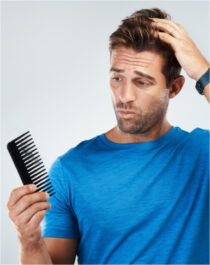
a) Hair loss – Hair loss is one of the most common concerns. It may be caused by ageing, stress, medical conditions, or hormonal changes.

b) Grey hair – As you age, pigment production slows, and grey strands appear. Stress, nutrition, genes, and environmental factors may also speed up premature greying.

c) Hair thinning – Loss of volume and strength can begin as early as your teen years. If not addressed, thinning hair can eventually lead to hair loss.

d) Dandruff – Flakes on your shoulders can affect your confidence and cause scalp itchiness.

e) Oily scalp – Sebum, your scalp’s natural oil, keeps hair healthy. But too much sebum can make hair greasy and clog pores.

f) Frizzy hair – Frizz happens when hair is dry and lacks moisture. Excess heat styling strips away hydration, leading to frizz.

g) Split ends – When hair tips become brittle and frayed, they split. Over-brushing or poor nutrition often makes this worse.

h) Lacklustre hair – If your hair looks dull, poor nutrition, dehydration, or harsh chemicals may be the cause.

Nourishment for Healthy Hair

Unlike the skin, hair cannot repair itself, but damaged hair can be replaced with new hair. That is why getting the right balance of vitamins, minerals, amino acids and phytonutrients is vital to revive your hair’s natural health and shine. Your hair and scalp require continuous nourishment to maintain healthy growth and replenishment.

a) Amino acids – Hair is made of keratin, a protein built from amino acids. Cysteine, lysine, and methionine are vital for growth and strength.

b) Phytonutrients – Wheat germ oil, safflower oil, and lecithin restore shine, nourish the scalp, and help reduce dandruff.

c) Vitamins – B vitamins such as B6, folic acid, biotin, and inositol encourage hair growth. PABA (para-amino benzoic acid) may slow premature greying. Vitamin C boosts collagen production, while vitamin E improves scalp circulation for growth.

d) Minerals – Zinc, iodine, selenium, copper, and manganese help combat hair loss. Silica strengthens hair and helps prevent split ends.


Lustrous and silky hair is a pleasure to behold. Start taking better care of your tresses and scalp today!

Frequently Asked Questions (FAQs):

Hair supplements are recommended for individuals experiencing hair loss, thinning, premature greying, dandruff, or weak, brittle hair. They are also beneficial for those with poor diets, high stress, or scalp imbalances that affect hair health.

References

  1. WebMD Editorial Contributors. (2024, October 11). Health benefits of thiamine (vitamin B1). WebMD. https://www.webmd.com/vitamins-and-supplements/health-benefits-of-vitamin-b-1
  2. WebMD Editorial Contributors. (2025, August 12). Riboflavin (vitamin B2): Uses, side effects, and more. WebMD. https://www.webmd.com/vitamins-supplements/riboflavin-vitamin-b2
  3. WebMD Editorial Contributors. (2024, October 30). Health benefits of vitamin B6. WebMD. https://www.webmd.com/diet/health-benefits-vitamin-b6
  4. Lindberg, S. (2026, February 25). How to make your hair grow faster and stronger. Healthline. https://www.healthline.com/health/beauty-skin-care/grow-hair-faster
  5. WebMD Editorial Contributors. (2024, May 22). Niacin (vitamin B3): Benefits and side effects. WebMD. https://www.webmd.com/diet/supplement-guide-niacin
  6. Berkheiser, K. (2024, January 30). Health benefits of vitamin B12, based on science. Healthline. https://www.healthline.com/nutrition/vitamin-b12-benefits
  7. WebMD Editorial Contributors. (2025, August 12). Pantothenic acid (vitamin B5): Uses, side effects, and more. WebMD. https://www.webmd.com/vitamins-supplements/pantothenic-acid-vitamin-b5
  8. Watson, S. (2022, March 28). Biotin for hair growth: Does it work? Healthline. https://www.healthline.com/health/biotin-hair-growth
  9. WebMD Editorial Contributors. (2024, June 21). Choline. WebMD. https://www.webmd.com/vitamins-and-supplements/choline
  10. Watson, S. (2023, April 13). Does folic acid help with hair growth? Healthline. https://www.healthline.com/health/folic-acid-for-hair
  11. Kubala, J. (2023, March 22). Inositol: Benefits, side effects and dosage. Healthline. https://www.healthline.com/nutrition/inositol
  12. WebMD Editorial Contributors. (n.d.). Vitamin E: Uses, side effects, and more. WebMD. https://www.webmd.com/vitamins/ai/ingredientmono-954/vitamin-e
  13. WebMD Editorial Contributors. (2026, January 20). L-cysteine: Uses, side effects, and more. WebMD. https://www.webmd.com/vitamins-supplements/l-cysteine
  14. Tinsley, G. (2024, April 17). Methionine: Functions, food sources and side effects. Healthline. https://www.healthline.com/nutrition/methionine
  15. Kubala, J. (2024, April 2). 4 impressive health benefits of lysine. Healthline. https://www.healthline.com/nutrition/lysine-benefits
  16. WebMD Editorial Contributors. (2025, August 13). Iodine: Uses, side effects, interactions, pictures, warnings & dosing. WebMD. https://www.webmd.com/vitamins-supplements/iodine
  17. WebMD Editorial Contributors. (2025, September 10). Manganese: Uses, side effects, and more. WebMD. https://www.webmd.com/vitamins-supplements/manganese
  18. Healthline Editorial Team. (2025, February 28). 9 science-backed benefits of cod liver oil. Healthline. https://www.healthline.com/nutrition/9-benefits-of-cod-liver-oil
  19. McIntosh, J. (2023, April 26). Lecithin benefits for your skin, digestion, and more. Healthline. https://www.healthline.com/health/lecithin-benefits
  20. McIntosh, J. (2018, May 30). Safflower oil for skin: Uses and benefits. Healthline. https://www.healthline.com/health/safflower-oil-for-skin
  21. Kersh, A. (2024, January 30). Why dermatologists say you should add wheat germ oil to your beauty routine. Real Simple. https://www.realsimple.com/wheat-germ-oil-8553254
  22. WebMD Editorial Contributors. (n.d.). Para-aminobenzoic acid (PABA): Uses, side effects, interactions, dosage, and warning. WebMD. https://www.webmd.com/vitamins/ai/ingredientmono-1004/para-aminobenzoic-acid-paba
  23. Raman, R. (2024, February 5). The 13 best foods for hair growth. Healthline. https://www.healthline.com/nutrition/foods-for-hair-growth
  24. Morris, S. Y., & Klein, E. (2023, April 19). The link between copper and nutrition. Healthline. https://www.healthline.com/health/heavy-metal-good-for-you-copper
  25. Watson, S. (2022, August 9). Silica for hair: Benefits, supplements, and more. Healthline. https://www.healthline.com/health/silica-for-hair
  26. Kubala, J. (2023, February 6). 7 science-based health benefits of selenium. Healthline. https://www.healthline.com/nutrition/selenium-benefits
  27. Murray, D. (2026, April 26). The health benefits of brewer’s yeast. Verywell Health. https://www.verywellhealth.com/brewers-yeast-benefits-431836
My Cart
Close Wishlist
Close Recently Viewed
Categories
Need help? WhatsApp